Why We Test for Asbestos Before Remodeling or Water Damage Repair in Texas
Asbestos testing isn’t a city permit checkbox. Here’s why we test before cutting, sanding, or tearing out materials in Hill Country homes, and what happens if you’d rather skip it.
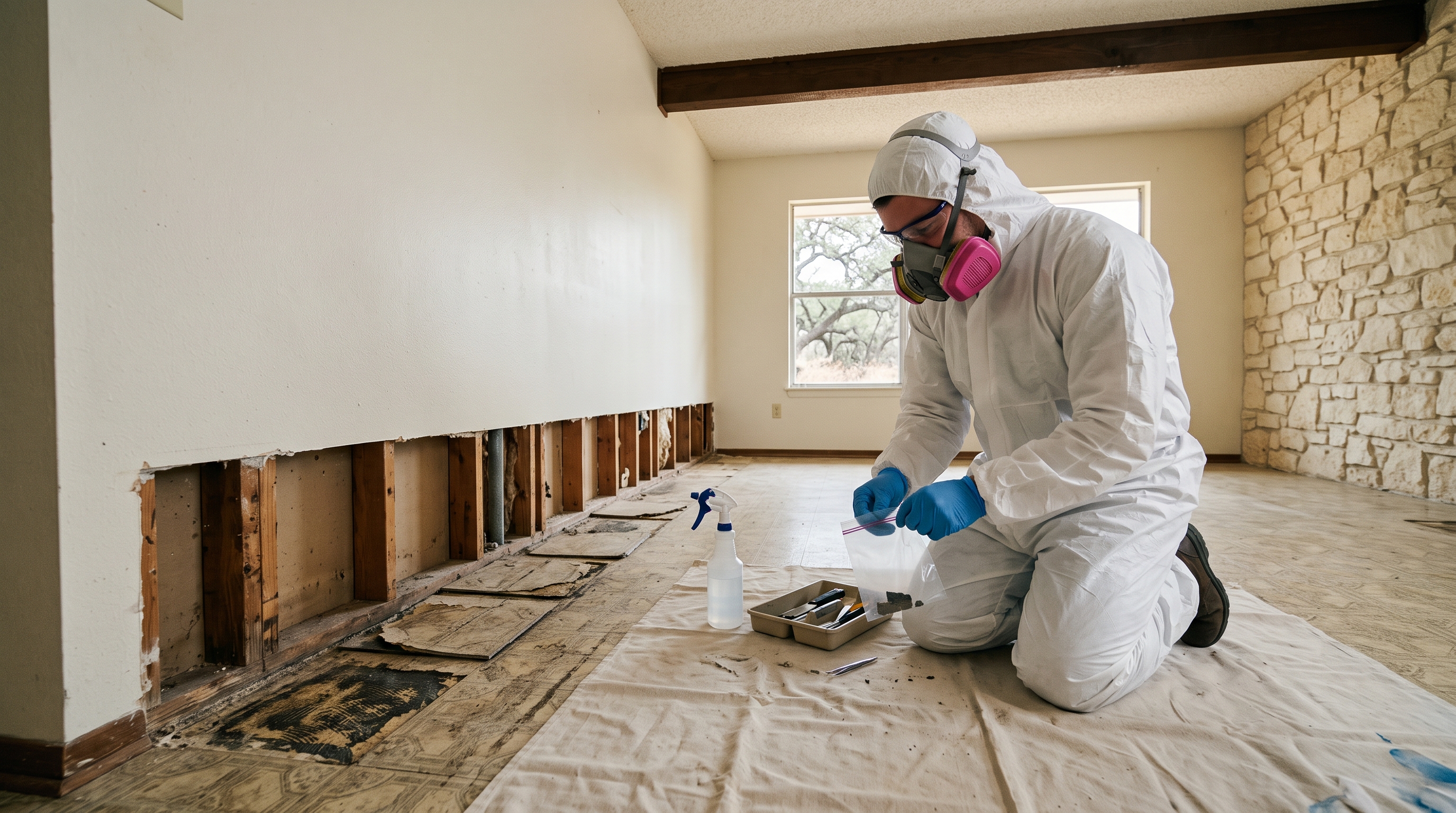
Before we cut into a wall, pull up old flooring, or scrape a ceiling, we recommend one small step that many homeowners don't expect: an asbestos test. It isn't a city permit checkbox. It's how we protect you, your family, and our crew.
Testing is a few small samples and a lab report. Skipping it to save that cost is how a simple water damage or flooring job turns into an exposure problem. Here's what testing actually does, when it comes up, and what your options are.
Why Asbestos Still Matters in Hill Country Homes
Asbestos was used in common building materials for decades, and many Boerne and Hill Country homes built before the 1980s still contain it somewhere. It's often found in:
- Popcorn or acoustic ceiling texture
- Drywall joint compound and wall texture
- Vinyl floor tiles, sheet flooring, and the adhesive (mastic) underneath
- Plaster
- Pipe and duct insulation
- Some roofing and siding products
You can't tell by looking. Materials with and without asbestos look the same. The only way to know is a lab test.
Disturbance Is What Creates the Hazard
Asbestos becomes dangerous when it's disturbed. Intact material left alone is generally low risk. The hazard starts when someone cuts, sands, scrapes, drills, or tears out material that contains it, because that can release microscopic fibers into the air.
That's exactly the kind of work involved in remodeling, water damage tear-out, and mold remediation. Removing wet drywall, pulling up flooring, or opening a ceiling all disturb materials. That's why we want to know what we're working with before we start.
Five Reasons We Test Before We Disturb Anything
1. Disturbance is what creates the risk
Cutting, sanding, scraping, pulling flooring, or demolition during water damage or mold work can release fibers if asbestos is present. Testing first tells us whether that risk exists before any dust is created.
2. OSHA still protects our workers, even when your house is exempt
Texas's asbestos survey requirements apply mainly to public and commercial buildings, and most single-family homes are exempt. But federal OSHA safety rules still apply to our workers on every job. We can't send a crew into unknown dust.
3. If it isn't tested, it's treated as asbestos
When suspect material hasn't been sampled, standard industry practice is to treat it as asbestos-containing. Guessing is how contractors get people exposed and then own the claim. We'd rather know.
4. A negative result makes your project faster and cheaper
If the samples come back clean, we don't need abatement methods, special waste handling, or a licensed asbestos abatement contractor. Your project moves forward on a normal schedule and budget.
5. A positive result protects you
If asbestos is found, you get documentation, proper removal by a licensed abatement contractor, and peace of mind. You're not left with a hidden problem after we leave, or when you sell your home.
What Asbestos Testing Involves
Testing is simpler than most people expect. A few small samples are carefully collected from the materials that will be disturbed, then sent to an accredited laboratory for analysis. Results usually come back within a few business days, and we'll walk you through exactly what was found and what it means for your project.
What If You'd Rather Not Test?
That's your choice to make. The alternative is that any suspect material we disturb has to be handled as if it contains asbestos. That means containment, protective equipment, special disposal, and potentially a licensed abatement contractor, all of which is slower and more expensive than a lab result.
That's why we recommend the test. In most cases, it saves time and money.
When Asbestos Testing Comes Up on Our Projects
Asbestos testing is most often part of:
- Water damage repair. Removing wet drywall, flooring, and insulation in an older home. Learn more about our water damage restoration process.
- Mold remediation. Opening walls and removing contaminated materials. See our licensed mold remediation services.
- Kitchen and bathroom remodels. Tearing out old flooring, tile, backsplashes, and walls.
- Flooring replacement. Pulling up older vinyl tile or sheet flooring and the adhesive beneath it.
If you've just had water damage, start with our guide to what to do in the first 48 hours.
Frequently Asked Questions
Does my house have asbestos?
If your home was built before the 1980s, there's a real chance some materials contain asbestos. Newer homes are much less likely to, but the only way to know for sure is to test the specific materials being disturbed.
Is it safe to stay in my home if it has asbestos?
Intact asbestos-containing materials that aren't being disturbed are generally considered low risk. The concern is when they're damaged or disturbed during work. If you're worried about your health, talk with your doctor.
How long does asbestos testing take?
Collecting samples takes a short visit. Lab results usually come back within a few business days, and faster turnaround is often available if your project is urgent.
What happens if the test is positive?
We'll explain exactly what was found and where. Affected materials are removed by a licensed asbestos abatement contractor following proper safety and disposal procedures, and then we continue with your repair or remodel.
Is asbestos testing required in Texas?
For most single-family homes, Texas doesn't require an asbestos survey before renovation. We recommend it anyway because federal worker safety rules still apply, and because testing protects you and keeps your project on schedule.
Questions About Your Project?
Call us at (830) 400-4420. We'll walk you through exactly what we found and what it means for your home.
40 Acres Construction is a veteran-owned general contractor based in Boerne, serving the Texas Hill Country. Hablamos Español.